Saturday, September 27, 2008

Buttered Crepes with Caramel and Pecans (Crepas con Cajeta)

Cajeta has entered my life as a result of this project, and that is a very, very good thing. I used to think that boiling a can of condensed milk was all I needed to make a nice dulce de leche. I have changed my mind -- cajeta is vastly superior (with all due respect to April Bloomfield, who apparently has access to better "tins" of condensed milk than I do). I, frankly, am not the world's biggest fan of goat cheese, but I love the same goat-y notes in my caramel, and how. Anyway, we now keep some cajeta on hand almost all of the time, and I was looking forward to making this. I admit I would generally much rather have a glass of Port for my dessert than a crepe, and I had never made crepes before, but this was an amazing dessert. In fact, I could have a glass of Port along with it; or maybe a glass of Sauternes. Here's the mise:
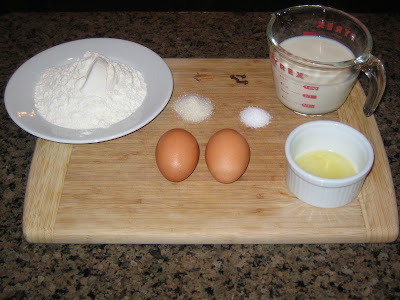


Clockwise from the top left: 2/3 cup of flour, 1/2 inch cinnamon stick, 3 cloves, 1 cup of milk (cow, not goat), some melted butter, 2 eggs, sugar, and salt. By the way, there is so much great sugar out there now other than the pedestrian granulated kind -- even from the big producers who have famous signs in various harbors -- that I don't know why people even used to eat boring old sugar.

Enough with the food rant. First, I made the batter for the crepes. Let me just say that, for those who may have been underwhelmed with crepes in the past, cinnamon/clove crepes are really good. I smashed up the cinnamon and cloves in a mortar and pestle and added all of the ingredients except the butter to the blender jar:
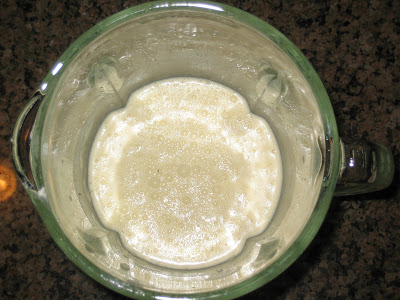


I pureed it, added the butter, and let the crepe batter rest for 2 hours. Meanwhile, I started on the topping. The mise for that was pecans, cajeta, and butter.
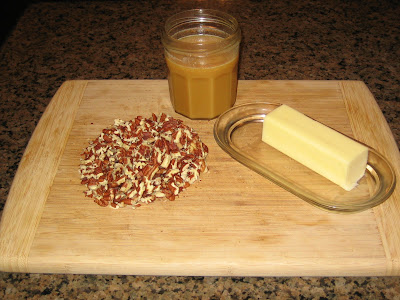


The first step is to toast the pecans. What's toast without butter? Well, I'm neither Ina Garten nor Alexandra Guarnaschelli, so this is a rare sight in my home:
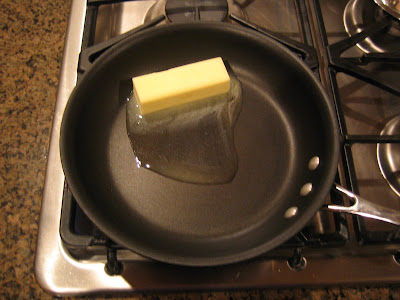


I must admit, I seriously considered converting this recipe into Homer's Space-Age Out-of-This-World Moon Waffles, but I was resolute.
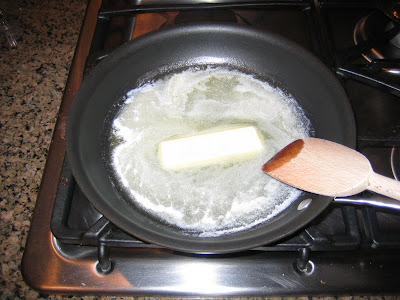


Still resolute, although I now was considering the Good Morning Burger.
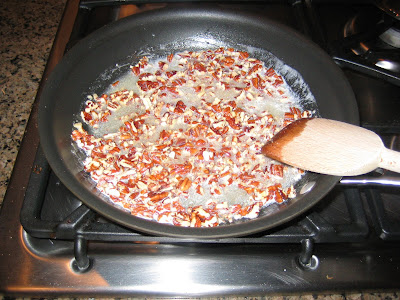


Ahh, finally the pecans are toasted in the brown(ing) butter, which results in this deliciosity:
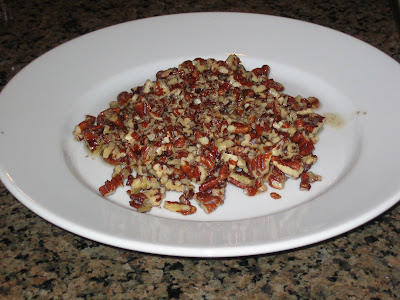


Not that I ate all of the butter; I carefully removed the nuts, leaving much of the brown butter behind:
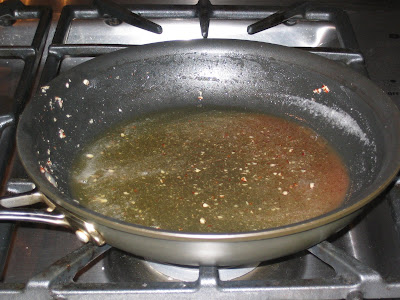


Okay, okay, you may see the butter reappear later. Anyway, I got out our crepe pan (why do we have one of those when I have never made crepes before?) and brushed it lightly with oil:
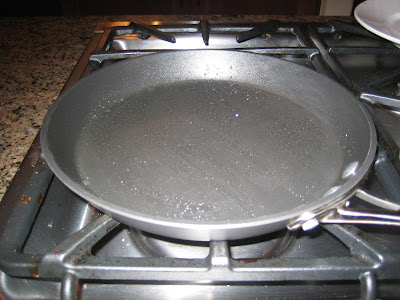


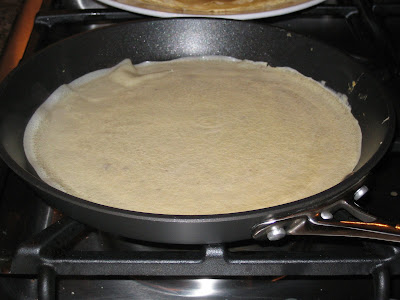
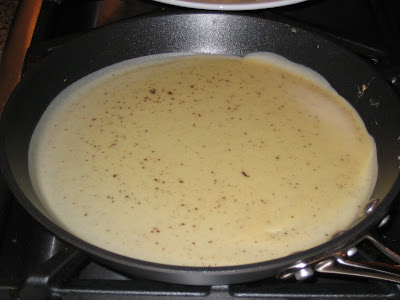
I proceeded to make the crepes:


Once all of the crepes were made, I spooned a tablespoon of cajeta on the crepes:
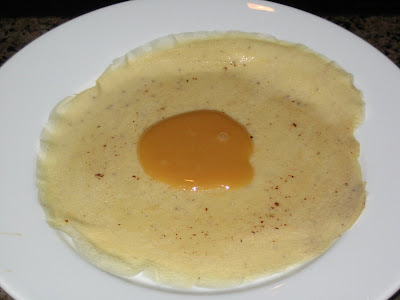


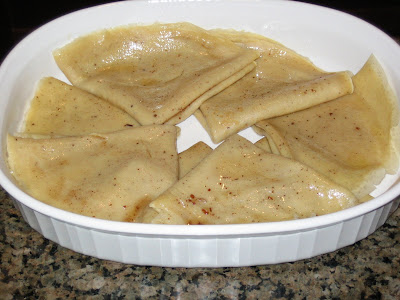
I folded them in half, brushed with some of the nutty butter (not Nutter Butter), and folded in half again. Those who followed the tortilla recipe closely will note that, with these two folds, I ended up with crepes that were one-quarter circles, not one-sixth circles. I brushed them with more butter and set them in a casserole dish:


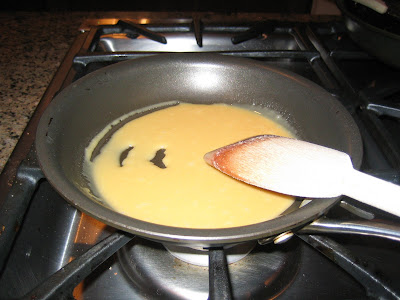
This wasn't really a decadent dessert yet, with just a few tablespoons of cajeta, a stick of butter, and crepes. More was necessary, so I took the rest of the cajeta and warmed it in a saucepan:


Meanwhile, I heated the crepes in the oven for 10 minutes:


To plate, I added the heated cajeta to a few crepes and drizzled the pecans on top, thusly. Now that's decadent:
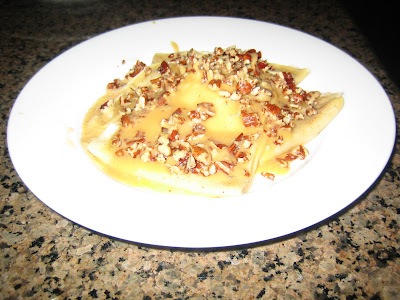


Overall, this was very good. It is incredibly rich, but there are enough flavors that it still works. I wouldn't necessarily eat it every day, but it was quite nice. Definitely worth the effort; the only problem is that it uses up an entire recipe of cajeta. Well, that just means it's time to buy another carton of goat milk and get going...

Sources:
Eggs and butter from Central Market

Sunday, September 7, 2008

Crisp-Fried Tortilla Chips (Tostaditas)

This is a nice, supposedly simple, "dish" I made to eat with the guacamole and the salsas I have been making. Tortilla chips are, in fact, simple, but the problem is that it is impossible to dry anything in Houston during the 10-month summers. I figured I could just slice up some tortillas, wait an hour or so, and fry them up. Not in Houston. After several hours of "drying," there was no apparent change in the tortillas. I could have tried to dry them in the oven, but did I mention that it was during the ten-month summer in Houston? Anyway, we ended up not having time, and I just left them in a bag to dry for several days. That seemed to work, eventually.

Anyway, here's the mise:


Not much to it. I sliced the tortillas into sixths to make chips:


Then I set them out in a single layer to dry (or so I thought):


I covered them with a towel so they would not curl up, but not even the magical wicking powers of cotton could help:


Finally, after quite a long time, I figured they were sufficiently dry and leathery:


With the chips finally ready, I prepared the oil for frying. At the time, I did not have a candy/frying thermometer, so I had to improvise:


I heated the oil to 380° and fried the chips. This was actually my last batch, so I had already taken the thermometer out:


I set them out on some paper towels and a paper bag to dry and sprinkled them with salt:


Overall, they were very good, but it's not something I thought was worth the several-day commitment for drying. Good tortilla chips are easy to find, and I doubt I'll make them again unless I have some stale tortillas lying around and no ideas for how to use them, even though I'm sure they would be easier to dry now that we are back in DC. Anyway, here's a plating shot with some of the guacamole and bonus product placement for my favorite beer, which I miss:


Sources:
Tortillas from El Tiempo Market

Monday, September 1, 2008

Quick-Cooked Tomatillo-Chile Sauce (Salsa Verde)

I've already made red salsa, so it's time to make green salsa. (This is the base for the poblano-based taco truck salsa I have been trying to match.) It's quite similar to the red salsa, not surprisingly, but it uses tomatillos instead of tomatoes, and it includes cilantro. Because I wasn't planning to make anything like huevos rancheros, I made half of the full 3-cup version in the cookbook. Here's the mise:


First, I boiled the tomatillos in salted water until they were tender. It usually takes about 12 minutes:

I added the tomatillos and the remaining ingredients -- onion, cilantro, garlic, and serrano (which I stemmed, but did not seed or devein -- spicy) to the blender and pureed it. It was mostly smooth, but it retained some small chunks for texture:


Then I heated some lard in a sauce pan. When the pan was hot enough to make a drop of the salsa sizzle, I added the whole blender jar:


I cooked the salsa, stirring constantly, for about five minutes, until it was much thicker and a little bit darker:


I then added a cup of chicken broth and returned the pot to a boil:


Once the salsa was boiling, I reduced the heat and simmered the salsa for about ten minutes:


This salsa is an excellent base, and, like the red salsa, it has totally ruined jarred salsa for me (which is not necessarily a bad thing). I like to experiment with it; adding a poblano (which I stem, seed, and devein) in addition to or instead of the serrano. We usually keep a jar of either this (or a variation of this) or red salsa (or both) around for our salsa needs, and it is very nice.

Sources:
Pretty much everything came from Whole Foods

Monday, August 18, 2008

Sparkling Limeade (Limonada)

Realizing that where there is lime zest, there is lime juice, I decided to make limonada at the same time as the lime zest cooler. Basically, the mise is the same limes from the last post. I simply juiced them after I zested them:


In the end, the limes yielded about a cup of lime juice. I added about a half cup of sugar and a quart of sparkling water, which resulted in this:


Well, it wasn't really that blurry in person, unless you spiked it with something. Simple and delicious, and much more to my taste (tart) than the lime-zest cooler (sweet). It lacked the interesting depth of flavor from the zest in the lime-zest cooler, though. Perhaps some combination of the two would be ideal...

Sources:
Limes from Whole Foods
Sparkling water from Whole Foods

Lime-Zest Cooler (Agua Preparada de Limon Rallado)

I bought a bunch of limes to make some drinks to go along with the guacamole from the last post. First up was the more difficult of the two, but it is also the one I prefer. It is very easy, and it has a nice depth of flavor that is hard to find elsewhere, I think. First, the mise:


Pretty simple. There's also sugar and water, but you know what those look like (and the sugar is added to taste). First, I zested all of the limes:


Then I added the zest to a quart of water (using some of the water to rinse out the bowl to make sure I got all of the zest):


I let the zest steep for an hour, until it looked pretty much like an inanimate carbon rod:


Well, it at least looked like radioactive waste... I poured the water through a fine-mesh strainer and pressed the zest to get as much lime-y (as opposed to limey) goodness (and radioactivity) as I could:


Next, I added about 3/4 cup of sugar (a bit less works, too, as I have subsequently proven) -- and that's it. Just add ice and enjoy:


Overall, this is very good, despite the fact that it would raise eyebrows at DHS if you were to take it to a public forum. Be careful with the sugar, and it is a nice, refreshing drink, even if it lacks the tang of a good limonada (as you will see). I think it would work well in a margarita with some additional lime juice (as the book suggests).

Sources:
Limes from Whole Foods

Guacamole with Tomatillos (Guacamole de Tomate Verde)

So, it's been a while since I posted, but I have been dealing with moving back home (you'll see my real kitchen -- it actually has burners that respond when you turn the dial -- in some posts soon), and I've had a busy few months on top of that. Somehow food blogging takes lower priority than my son and my job. Anyway, on to the food. Sorry if there's not much detail, but I actually made this almost four months ago. Anyway, here's the mise:


First, I husked and washed the tomatillos, and then I boiled them for about 10 minutes:


Meanwhile, I diced the onion, cilantro, and serranos (thusly):


I then put everything into the blender:


Next, I "whacked" it, as either Jamie Oliver or John Gotti might say, until the ingredients were a coarse puree. You can't really see how coarse because of the bubbles, but them's the breaks:


Finally, I mashed the avocado in a bowl and added the tomatillo/onion/chile puree:

That's pretty much it. (Sorry about the mess on the side of the bowl.) The guacamole was nice, and (obviously) thinner than guacamole made only from avocados, which I think is often too heavy. The best thing about this guacamole is that the acid in the tomatillo helps prevent browning, which is important when you are taking this to someone's house an hour away (as I was). I also liked the trick to keep the avocado pit in the bowl with the guacamole, which also helps delay (but does not prevent) browning. This was very good, and it will certainly make it into our rotation.

Sources:
I think I actually got the ingredients for this from Whole Foods, not Central Market

Sunday, June 22, 2008

Ranch-Style Eggs with Tomato-Chile Sauce: Huevos Rancheros

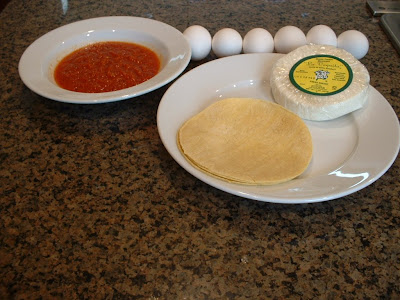
I had to do something with all of that salsa. I'm not really a huge fried egg fan, but this looked like a good weekend breakfast. I apologize in advance for the blurry pictures, but there was a lot to do at once with this dish, even though there were not many ingredients. I didn't have a lot of time for photography. Maybe they can go here, along with the nude women and businessmen (whether walking exuberantly or not). Here's the mise:


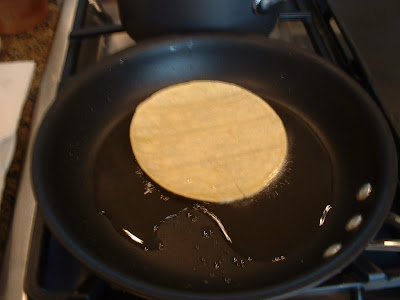
As I said, pretty simple. Just some eggs, queso fresco, some old corn tortillas, and about a cup and a half of the salsa. First, I warmed the salsa in a saucepan (not even a blurry picture of that, but it looked pretty much like the last picture from the salsa post). Meanwhile, I fried the tortillas - in vegetable oil, not lard, for once - for a few seconds on each side, just to warm them up:


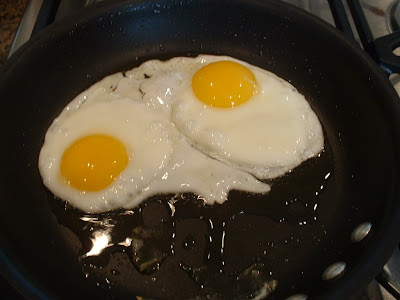
Next, I fried the eggs, two at a time:


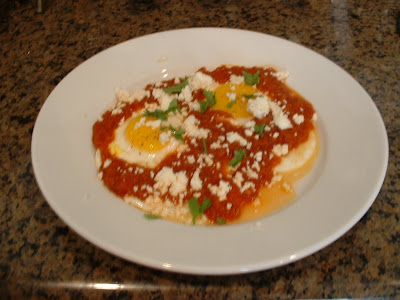
I added salt and pepper to the eggs and moved them to a cookie sheet, where I held them in a low oven along with the fried tortillas to keep them warm while I fried the other eggs. For plating, I added a tortilla to the plate, topped it with two of the eggs, and spooned the salsa over the eggs. Then I sprinkled on the queso fresco and some chopped parsley:


This dish was really good. I'm not sure it converted me to fried eggs, but Katy loved it. I think this and the fish baked in cornhusks are her two favorite dishes, even with the mole. She mentions this dish to people a lot, and even people I barely know ask me about it. I call that a success.

Sources:
Queso fresco from La Vaquita
Tortillas from El Tiempo Market
Eggs from Central Market