Monday, March 31, 2008

Tacos with Potatoes and Mexican Sausage (Tacos con Papas y Chorizo)

This is a simple dish that I have made before, but I really like it. It's a great meal to make during the week because it's so easy, as long as I remember to take the chorizo out of the freezer, and it tastes great (plus, the picture of it in the cookbook makes me want to cook it again every time I see it). There are only four ingredients. To be fair, one of them is the chorizo, which is quite an undertaking if you don't choose the "store-bought" option he offers -- but why would I do that? Maybe because I did so for the corn tortillas? Shut up.

I already made and froze chorizo based on his recipe, although not identical to it (I didn't have all of the chiles he calls for, so I used my chili powder, which I make based on Alton Brown's recipe). The chorizo's really good, and I'll have to make it again for the blog.

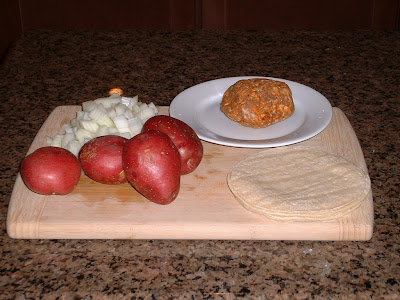
Anyway, here's the mise:

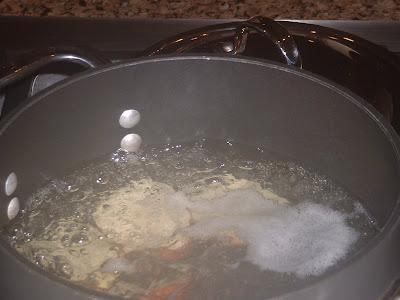
That's the chorizo on the plate. When I made it, I only had the meat grinder attachment for my KitchenAid, so I made balls of the sausage and wrapped it in plastic wrap for freezing. Now that I have the sausage stuffer attachment, I'll have to make proper links next time. Anyway, the first thing I did was halve the potatoes and parboil them for about 15 minutes:

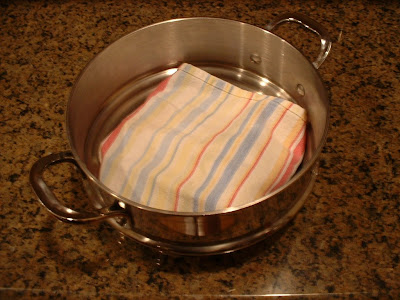
The next order of business was to warm up the tortillas. The cookbook has a great method for warming corn tortillas by wrapping them in a towel and steaming them for 15 or 20 minutes. I complied:

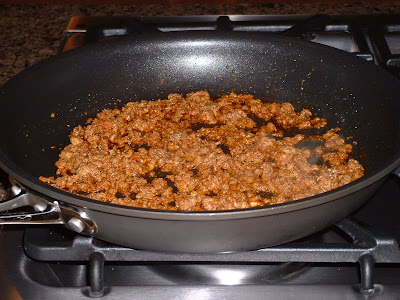
Yes, I actually put the steamer over a pot of boiling water. Sheesh. Next, I cooked the chorizo:

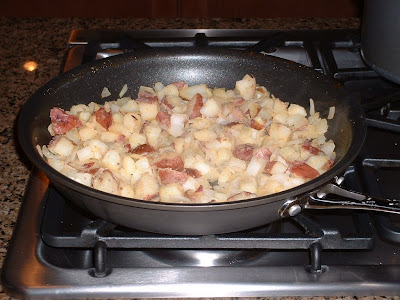
Meanwhile, I diced the potatoes. When the chorizo was ready, I took it out of the pan, leaving as much of the chorizo-y fat behind as I could. I added the potatoes and onions to the pan:

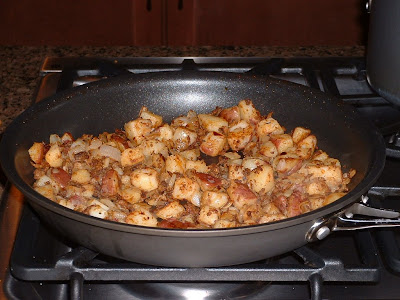
I cooked them for about 15 minutes and added the chorizo back to the pan to bring it all together.

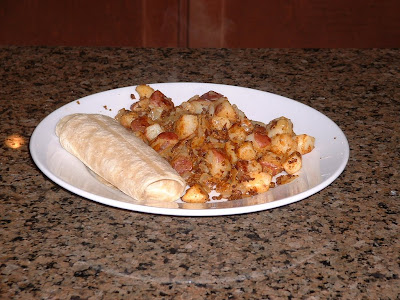
Pretty easy, huh? Sure, it is! That doesn't mean it doesn't taste good, though. It does! Here's the final plating before we inhaled it:

I really should have wiped up those specks around the plate, but I didn't. A bit of cilantro on top of the dish wouldn't have killed anyone, either. So I'm not exactly Joël Robuchon, but he doesn't have either the billable requirement (sorry, it's an "aspirational goal") that I have or a six-month old. I figure I've made it past the laziness threshold for the day. Overall, I think it's a really good, simple dish. What more do you need than some potatoes and something from the magical animal? Plus, the chorizo brings so much subtle flavor to the party that it seems like a shame to dump a bunch of ingredients on top of it to mask it. Yes, this clearly deserves a spot on our weekday rotation.

Sources:
Our refrigerator and freezer (hey, it's a weekday, and the potatoes and onions lost the chips I implanted in them so I could remember where I bought them)

Wednesday, March 26, 2008

Three of Three: White-Rice Pilaf with Corn, Roasted Chiles, and Fresh Cheese (Arroz a la Poblana)

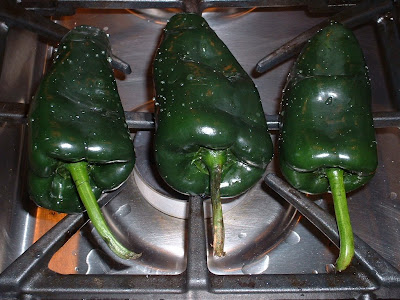
Now we get down to the nitty-gritty. The final preparation in this dish is really just a side of Pueblan rice, but it is very good Pueblan rice. The first step in preparation for the rice is to roast three poblano chiles, which I did over a burner on our stove:


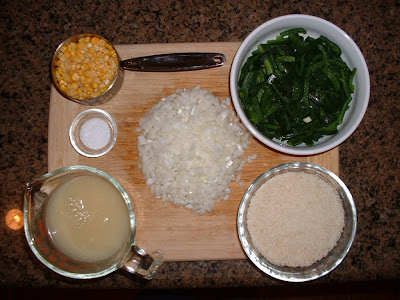
After they are sufficiently roasted, you can just leave them in a bag to steam and pull the skins off. I, however, did a bit of a Shary Bobbins-esque half-assed job (it's the American way) when roasting the chiles, so a lot of the skin stayed on. (Mom, it's okay to put that word on the Internet because it's pronounced haahhf-aahhsed in a British accent, and nothing said in a British accent can be wrong, just like how no one who speaks German could be an evil man.... While I'm talking about Cape Feare, I have been sitting in meetings all week while people talked about how Kroll is going to do all of this work for us, and every time it came up, all I could hear in my head was "All hail Krull and his glorious new regime! Sincerely, Little Girl." My colleagues didn't seem impressed when I informed them of this fact, for some reason. Oh, well.) Anyway, I stemmed, seeded, and deveined the chiles and sliced them into short, thin strips. Here they are, along with the rest of the mise:

We have started to cook all of our rice along with onions in a bit of pork fat before adding the broth, even for risotto, so I love how the recipes in the cookbook call for that. I highly recommend it. That's what I did first:

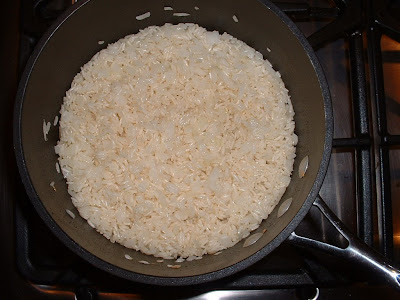
I kept it going until the onion was translucent, but not browned. Meanwhile, I brought the broth and a bit of salt to a simmer, added it to the rice and onions along with the chiles and corn, and cooked for about 15 minutes. I took it off of the heat and let it sit for a few minutes before adding the queso fresco. Because it was late and I was lazy, I put it into bowls and turned it out onto the plate, rather than doing something fancier (plus, I'm still not sure about using what I bought to pass as ring molds).

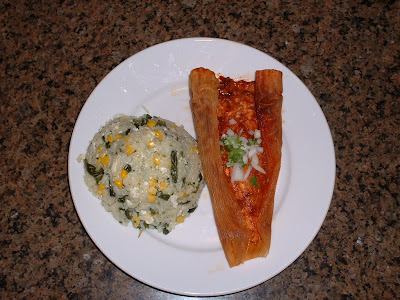
Finally, here's a plating picture:

Mmm... it was very good. The fish was cooked perfectly, and it stayed nice and moist in the adobo. The adobo was excellent, with a nice depth of roasted flavors, but not overly spicy. Despite the lackluster roasting on my part, the poblanos were also more flavor than spice, but their spice did add a nice dimension to the rice and played well with the queso fresco. Overall, a great dish -- we had it two nights in a row (we made four) and it was just as good the second night when we ate it in tacos. I think it's a definite make-again dish.

Sources:
Veggies from Central Market
Jasmine rice from our pantry and who knows where before that?

Monday, March 24, 2008

Two of Three: Chile-Bathed Fish Grilled in Cornhusks (Pescado Adobado en Hojas de Maiz)

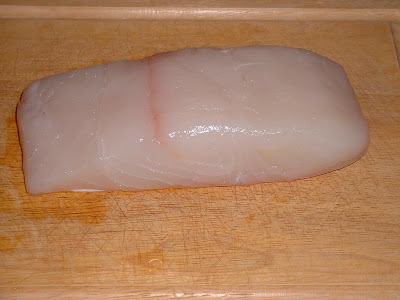
What do you do when you have adobo just lying around the house? Well, one excellent thing to make is pescado adobado, or fish with adobo sauce. The recipe calls for relatively inexpensive fish like cod or catfish, but the fishmonger recommended halibut because the halibut season had just started. I love halibut, if only because it reminds me of Alaska, particularly Seward and Homer. I like the flavor, too, and if my version of this dish was a bit decadent, well, so what? Let's get started. There isn't much mise for this -- it's pretty much just fish and adobo -- but let's have a look at the pretty fish:


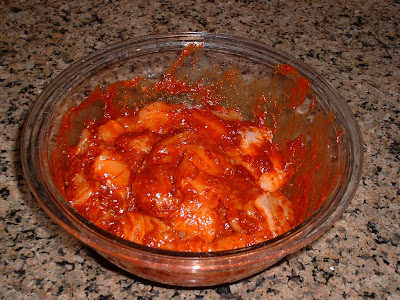
Yes, I may have caressed it once or twice before slicing it into strips and covering it with adobo to marinate. Bayless calls them "sticks," but that makes me think of this:

Not this:


Which, by the way, makes me think of this:


Not this:

INGREDIENT(S): HALIBUT.

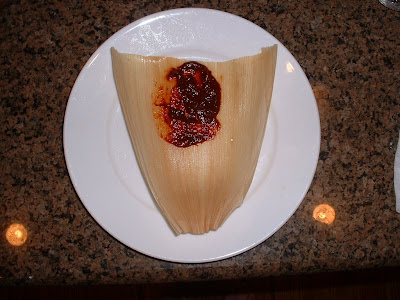
Anyway, while the fish was marinating, I soaked some corn husks in boiling water to soften them so they could be wrapped around the fish. After a couple of hours, everything was ready to go. First, I added some adobo to the husk:


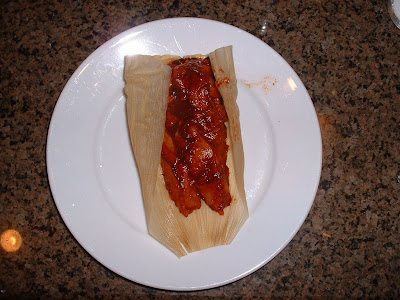
Then, I added some fish, another layer of adobo, a bit of salt, some more fish, and more adobo:

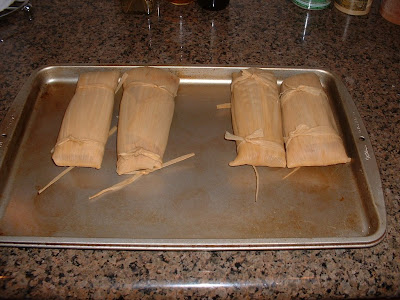
Finally, I wrapped up all of the husks into bundles to go under the broiler:

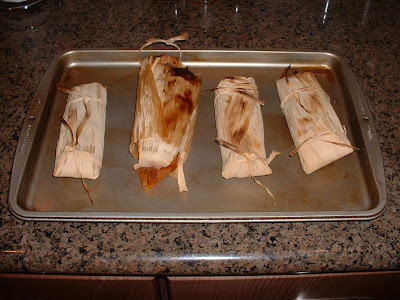
After broiling them on both sides, they looked like this (I had to open one to make sure it was done):


That's not much of a final plating, but you'll just have to wait for the next installment...Tune in next time.

Sources:
Central Market for just about everything

Thursday, March 20, 2008

One of Three: Adobo

Sunday was a big day; perhaps a bit too big because we didn't actually sit down to eat until about 9:45. That's what happens when you go out for lunch, then go shopping for ingredients, then come home and start cooking in the late afternoon (and a certain infant won't let your sous chef help out in the kitchen). Anyway, we finally had our meal, and it was fantastic. The meal included three recipes from the cookbook: adobo (a red-chile marinade), which was used in the chile-bathed fish grilled (broiled, actually) in cornhusks (pescado adobado en hojas de maiz), and a side of white-rice pilaf with corn, roasted chiles, and fresh cheese (arroz a la poblana). This post is the adobo, and two more posts will follow.

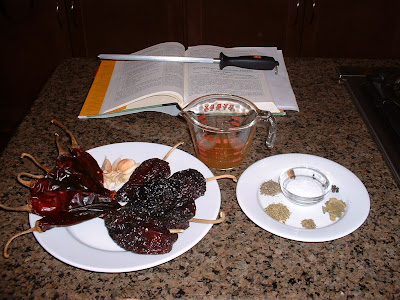
So, on with it! This has quite a mise:


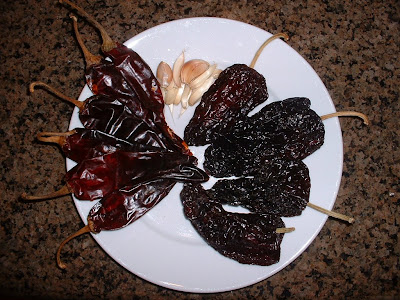
Is that too much for you? Well, then, here are the chiles (guajillos on the left and anchos on the right) and garlic:


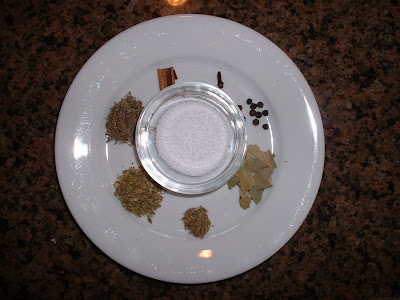
And here are the herbs and spices (and salt, which is really neither):


There was also vinegar. While I'm totally down with my apple cider vinegar, do you really need a picture? What kind of a crazy person would include a picture of a cup of vinegar? Someone who thought a picture of brine was a good idea? Oh.

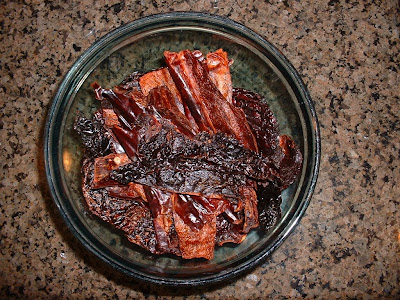
Anyway, this recipe called for ten peppercorns. That's fine -- I can count, but I certainly was reminded of this hilarious post from FLAH. At least ten sounds like a reasonable number, unlike twelve (Why not thirteen? Do you hate bakers?). Anyway, the first order of business was to toast the garlic and roast the chiles. I seeded and deveined the chiles, tore them into strips, and toasted them until they blistered:


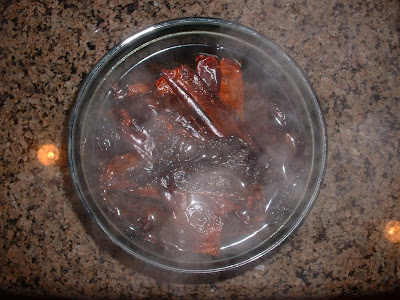
While I skinned the garlic, I poured some boiling water over the chiles to soak for a while to rehydrate them:


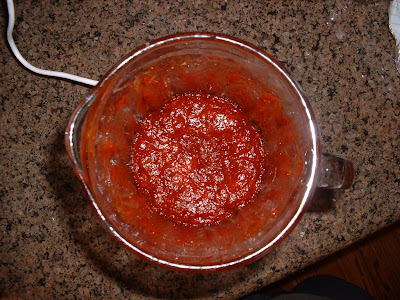
I smashed up the herbs and spices using a mortar and pestle, and I added everything to the blender and went to town:


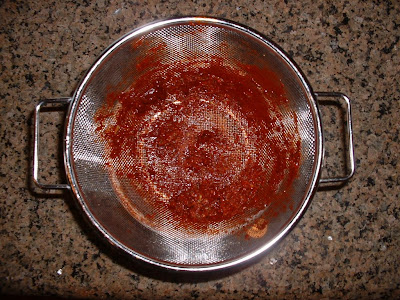
Once everything was pureed (for the most part), I pushed the adobo through a strainer:


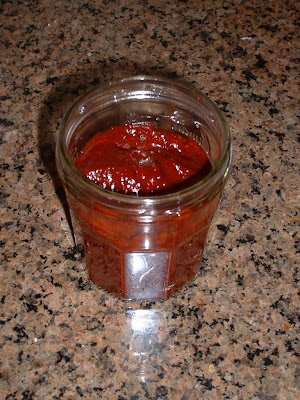
That led to a nice, smooth sauce, which I put in a jar to be used shortly...


Although it's just a sauce, I had to try it, albeit with a bit of trepidation because of all of the chiles. However, it was not overwhelmingly hot. Instead, it had a nice, smooth flavor -- with great depth -- but without the tongue-blistering effect. It really validated for me the importance of toasting the dried chiles -- you get amazing flavor without overwhelming heat. Not that I'm afraid of heat -- I still love the chipotle salsa, which isn't lacking in heat -- but I also love the flavor of chiles with a bit more subtlety, particularly when it is going to be paired with something more delicate like fish (you'll see...). Very nice.

Sources:
Don Enrique chiles
Garlic from Central Market
Our spice rack for just about everything else

Saturday, March 15, 2008

Wheat-Flour Tortillas (Tortillas de Harina)

For my first official recipe, I thought I'd start off with something fairly easy. We were also low on flour tortillas for the normal Saturday lunch I make: burritos made with whatever we have in the refrigerator. We had leftover rice and chicken fajita meat from dinner Friday night, and I planned to roll it up and reheat it in tortillas, but I needed tortillas to do that.

Here's the mise:

Those of you who have the cookbook will note that the recipe calls for lard or shortening (shiver), and there is nothing that looks like either of those in the picture. Whenever we can, we use pork fat that is left over after we make pulled pork instead of butter or lard -- it's like lard, but it has additional spices and pork-y goodness in it. (A friend of ours once asked us, "You mean on toast? That sounds awesome!" Not yet, but he may well be right...) So, you might notice some weird flecks in some of the pictures -- that's just extra flavor, not a dirty kitchen.

Anyway, I added the pork fat to the flour and worked them together by hand. Bayless says to make sure the fat is "completely incorporated." That posed a bit of a problem for me, because can I ever get the fat "completely" incorporated? And what about those italics? Do they raise the bar, and, if so, how much? I decided that I had done enough there were no more clumps. You'll have to wait and see if it worked out. Here's what it looked like:

Next, I added the salt to the water, and guess what that looked like:

Pretty amazing, huh? I made a well in the flour/fat mixture and brought the dough together:


I kneaded the dough for a while. Bayless calls for kneading until the dough is "smooth." My dough never really got smooth, but I was worried about developing too much gluten, so I stopped when it looked like this:

Next, the recipe calls for making 12 balls of dough (for 12 tortillas). I read in another recipe that you can just keep dividing it in two until you get 12 balls, but I had a sneaking suspicion that wouldn't work, perhaps because I can multiply by two... Instead, I divided my ball into three sections:

And then I rolled those sections into balls, which I cut in half and then in half again. So that's how we get to 12! I covered the balls in plastic to rest at room temperature for 30 minutes:

The timing worked out well, because Charlie woke up hungry about that time. We have just introduced him to avocados, after rice cereal, apples, and sweet potatoes. It's not from Authentic Mexican, but, who really needs a recipe for mashed avocado? Here's his mise:

Pretty simple, huh? This is the final dish. I think it looks good!

What did he think? Well, let's just say he liked it much better than his first taste of apples:

Those were Fuji, and we found he is much happier with Red Delicious. Anyway, with baby back to happy mode, I could get back to the tortillas. I rolled them out into rounds (roughly 7"), and cooked them on a cast-iron griddle:


As you can see, some got a bit burned, but others looked really good:

Here's the stack:

We ate two of them immediately with some avocado and a touch of salsa (a modified version of the Bayless chipotle chile sauce), and I made burritos with a couple more. Overall, we thought they were very good, and much better than store-bought.

I can see Bayless's point that the tortillas made with only lard are a bit on the heavy side, but I don't believe in vegetable shortening. I may try these again with a bit of canola oil mixed into the pork fat to lighten it up a bit. We'll see how that works.

Sources:
All-purpose flour from King Arthur Flour
Avocado from El Tiempo Market
Welcome to the Gringo Kitchen!

Thanks for stopping by. Inspired by -- well, actually, copying from -- one of my favorite blogs, French Laundry at Home, I decided to launch a similar project: cooking every recipe in a single cookbook. While FLAH is geared, I think, to gaining an appreciation for striving to be a perfectionist, as Thomas Keller puts it, my focus is different. I want to learn a new style of cooking and gain an appreciation for something that I have glimpsed, but rarely experienced fully: true Mexican cooking. And, with a new baby around, I don't really have the time or the flexibility to focus on something so audacious. (That and Chef Armstrong from my favorite restaurant hasn't written a cookbook yet.) I'm not a big fan of Tex-Mex food and other Americanized versions of Mexican food, but I am a fan of more authentic styles of Mexican cooking, which ultimately led me to Rick and Deann Groen Bayless's Authentic Mexican cookbook. I have prepared a few of the recipes in the cookbook, but I thought that jumping in with both feet might be the way to go. I hope I enjoy it, and I hope you do, too.